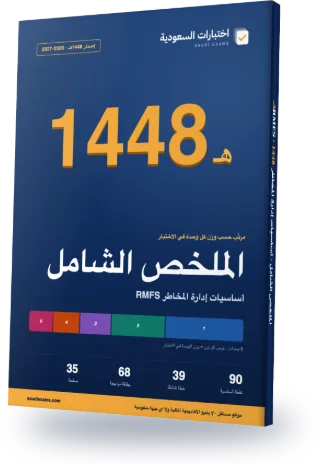
Try the questions in the test above first, then open each one here to see the correct answer and why every other option is wrong.
01A manager proposes adding a password on top of the PIN for ATM cash withdrawals, then a verification phone call, then requiring the customer to bring ID to a branch. What does the learning material conclude from this path?
Practice question Unit: Risk Management Fundamentals
ARisk may fall, but customers will leave, so a balance is needed ✓ Correct answer
This is what the material concludes: balance is what effective risk management is about.
BRisk falls to zero, which shows that risk management has been effective
The material says risk may fall, not vanish, and that reducing risk is not proof of effectiveness.
CThe bank is right to keep adding controls, whatever customers think of them
The material criticises piling on controls without regard for lost customers.
DThe risk is passed on to the customers, who now carry it themselves
The material does not say the risk passes to customers.
Reference: Financial Academy & Euromoney, Foundation Risk Management Qualification in Financial Services learning material (2024), Section 1.1.3 (Risk strategies: Reducing risk?), p. 8
Ask a friend
02A bank lost large sums through inaccurate currency calculations after launching an untested system, so it adopted a policy that every new technology must pass strict external testing, and announced that the risk was now managed. Which assessment matches the study material?
Practice question Unit: Risk Management Fundamentals
AThe policy dealt with one cause, and the risk of inaccurate calculations remained ✓ Correct answer
This is the material's reading: the policy managed the cause (untested software) while the risk stayed.
BThe policy reduced the size of the financial consequence but had no effect on the risk
Testing does not soften the financial consequence after an incident. It relates to one cause only.
CThe policy removed the risk, because it stops the same incident from happening again later
Stopping the same incident is dealing with the cause, and the risk remains because other causes are possible.
DThe policy showed that what happened was a one-off incident that cannot recur in future
The material shows the incident happened again later through different causes, so it was not a one-off.
Reference: Financial Academy & Euromoney, Foundation Risk Management Qualification in Financial Services learning material (2024), Section 1.3.3 (Focussing on risks), p. 14–15
Ask a friend
03In a bank, some parts of a multi-part payment instruction are sometimes executed while others are not, and the bank only finds out when the customer calls to complain. The only control in place checks the accuracy of payment details. What is the most accurate conclusion?
Practice question Unit: Risk Management Fundamentals
ANo control prevents, detects or reduces incompleteness, because the risk was not broken down ✓ Correct answer
This is what the material describes: an accuracy check does not address completeness, and breaking the risk into components (complete, accurate, timely...) ensures it is addressed.
BCustomer complaint calls are an adequate detective control for the risk of incompleteness
A customer complaint is a sign that detection has failed, not a detective control designed for this risk.
CThe existing control is adequate, and the problem lies in how many staff process payment orders
The problem is the absence of a control for completeness, not the number of staff.
DTightening the accuracy check alone removes the risk of incomplete multi-part instructions
A stricter accuracy check still does not deal with completeness, so it does not remove this risk.
Reference: Financial Academy & Euromoney, Foundation Risk Management Qualification in Financial Services learning material (2024), Section 1.4.3.1 (Preventing, detecting and reducing risk), p. 23
Ask a friend
04At a bank, 1,000 loan offers are issued each month and 10% contain errors before any control. The supervisor check was 98% effective, but testing now shows it has fallen to 90% with volume unchanged. How many errors are expected each month now?
Practice question Unit: Risk Management Fundamentals
A10 errors ✓ Correct answer
1,000 × 10% = 100 errors before the control; 10% remain, which is 10 after it.
B2 errors
2 is the figure at 98% effectiveness; effectiveness fell so the number rose.
C90 errors
90 is the number of errors the control catches, not those that remain.
D100 errors
100 is the count before the control, ignoring that the control still catches 90%.
Reference: Financial Academy & Euromoney, Foundation Risk Management Qualification in Financial Services learning material (2024), Section 1.5.2 (How to use KRIs), pp. 29–30
Ask a friend
05A bank finds a rounding error in interest calculations that undercharged 25,000 customers by an amount between zero and SAR 8 each. Reviewing every customer file to learn the exact amounts would cost SAR 1.5m and take several months. An expert proposes instead that the bank absorbs the difference for everyone. What is the highest possible cost of that option, and what does it mean for the decision?
Practice question Unit: Measuring Risk
ASAR 100,000 (25,000 × 4), because only the average has to be covered, so this figure is enough for the decision
The average is not enough: the decision needs the highest possible cost (8 × 25,000), not its average.
BSAR 200,000, yet the full review is still better because a sound decision requires exact figures
The figure is right but the conclusion is wrong; the material shows exact numbers are often unnecessary and here they cost more.
CSAR 1.5m, because the review cost is the only reliable figure that can be used to take the decision
The review cost is the dearer option, not the more reliable one, and it is not the cost of absorbing the difference.
DAt most SAR 200,000 (25,000 × 8), so absorbing the difference is cheaper than the review ✓ Correct answer
Even in the worst case the difference is SAR 200,000, far below the review cost, and the decision needs no exact figure.
Reference: Financial Academy & Euromoney, Foundation Risk Management Qualification in Financial Services learning material (2024), Section 2.1 (Why do we measure?), p. 44
Ask a friend
06A SAR 500m portfolio must follow these limits: no less than 20% in local currency, no more than 40% in domestic equities, no more than 20% in foreign equities and no more than 10% in emerging markets. It holds SAR 90m in local currency, SAR 190m in domestic equities, SAR 95m in foreign equities and SAR 45m in emerging markets. Which limit is breached?
Practice question Unit: Risk Appetite
ALocal currency ✓ Correct answer
90 of 500 is 18%, below the 20% minimum. This is the only limit breached.
BDomestic equities
190 of 500 is 38%, below the 40% maximum.
CForeign equities
95 of 500 is 19%, below the 20% maximum.
DEmerging markets
45 of 500 is 9%, below the 10% maximum.
Reference: Financial Academy & Euromoney, Foundation Risk Management Qualification in Financial Services learning material (2024), Section 3.2 (A brief history of risk appetite), p. 79
Ask a friend
07A review at an insurer finds claims payments approved outside its tightened risk appetite. No one had told the team about the new appetite, and it had no training on the new limits. According to the material, what is the usual underlying cause?
Practice question Unit: Risk Governance, Culture and Stress Testing
AThe risk committee did not meet often enough in the year
The material does not attribute this failure to how often a committee meets.
BThe second line gave no clear guidance, training or tools ✓ Correct answer
The material usually traces the first line's inability to decide well to the second line not providing tools, training or guidance.
CThe third line did not audit the claims team in time
Audit timing does not explain the missing guidance and training, which are second-line tasks.
DThe claims team has no role in managing risks
On the contrary, the first line is responsible for managing risks; the issue is what it was given in tools and guidance.
Reference: Financial Academy & Euromoney, Foundation Risk Management Qualification in Financial Services learning material (2024), Section 4.1.3 (Second Line), p. 90
Ask a friend
08A bank is forming a seven-member risk committee. What is the smallest number of independent members that meets the learning material's requirement of a majority of independent members?
Practice question Unit: Risk Governance, Culture and Stress Testing
A3
Three of seven is less than half, so there is no majority.
B4 ✓ Correct answer
Four of seven is more than half and is the smallest number that gives a majority.
C5
Five gives a majority but is not the minimum.
D7
The risk committee does not need all members independent; a majority is required.
Reference: Financial Academy & Euromoney, Foundation Risk Management Qualification in Financial Services learning material (2024), Section 4.1.7 (Risk Committee), p. 94
Ask a friend
09A financial commentator at a seminar says Basel 3 may never be fully implemented. Which argument reflects these commentators' view as the learning material presents it?
Practice question Unit: Relevant Laws, Regulations and Issues
AThe weakness of the rules, since banks need not hold any extra capital in times of severe stress
Their argument is that the rules are very strict, not weak; they raise capital requirements.
BA lack of international interest in financial stability once the financial crisis ended
The material says Committee members continue to raise capital requirements to ensure stability.
CA conflict with the Basel 2 agreement, which has not yet been formally withdrawn
The commentators' argument does not rest on a conflict with Basel 2.
DStrictness: more capital may stress banks further, making the cure worse than the problem ✓ Correct answer
They see the rules as too strict, and extra retained capital (which could be used for profit and innovation) may harm banks.
Reference: Financial Academy & Euromoney, Foundation Risk Management Qualification in Financial Services learning material (2024), Section 5.1.4 (Basel Accords), p. 117
Ask a friend
10In its annual inventory a bank flags model risk as material, but the CFO finds it hard to measure and wants neither to set aside capital nor to write any justification. Which of these matches the material?
Practice question Unit: Relevant Laws, Regulations and Issues
AAllocating capital to it, or documenting why no capital is held ✓ Correct answer
Principle 4 asks the institution, for every material risk, either to allocate capital to cover it or to document why no capital is held.
BReclassifying it as not material because it is hard to measure
Difficulty of measurement does not make a risk less material, and reclassifying it for that reason has no analytical basis.
CListing it in the inventory with no further step, since acknowledging it is enough
Listing it is only the first step; a decision to allocate capital or to document the justification is still required.
DCharging it automatically to the subsidiary with the least capital
The principle does not provide for loading the risk onto a subsidiary automatically; it requires a documented decision for the institution.
Reference: Financial Academy & Euromoney, Foundation Risk Management Qualification in Financial Services learning material (2024), Section 5.2 (ICAAP), Principle 4, p. 123
Ask a friend