CME-5A – Corporate Finance Technical Foundations: free practice test
Start with 10 free questions to see what needs more practice. Finish to see your score, weakest units and every option explained.
Practice test questions with answers and explanations
Try the questions in the test above first, then open each one here to see the correct answer and why every other option is wrong.
01Base Co has profit after tax of $500,000 before income from investees. It owns 80% of a subsidiary with profit after tax of $200,000 and 30% of an associate with profit of $100,000. What profit is attributable to Base's ordinary shareholders?
Reference: CISI Corporate Finance Technical Foundations workbook, edition 16 (Feb 2026), Chapter 1, Section 2.2 (PDF p. 16); syllabus 1.1.2
02Beta Co has a SAR 240 million loan repayable in 8 equal annual instalments. Three instalments have been paid, and the next one falls due within the next twelve months. What amount is shown as a non-current liability for this loan?
Reference: CISI Corporate Finance Technical Foundations workbook, edition 16 (Feb 2026), Chapter 1, Section 3.1.5 (PDF pp. 26-27); syllabus 1.2.1
03A company has trading profit of SAR 640m, share of results of associates of SAR 40m, finance income of SAR 10m and finance costs of SAR 90m. Corporation tax is 25% of profit before taxation. What is profit for the year?
Reference: CISI Corporate Finance Technical Foundations workbook, edition 16 (Feb 2026), Chapter 1, Section 3.2.2 (PDF p. 33); syllabus 1.3.1
04Alpha Co is being liquidated. A property subject to a fixed charge is sold for SAR 4.0 million, and the loan secured by that charge is SAR 3.0 million. Its other, uncharged assets realise SAR 2.0 million. Preferential creditors are owed SAR 0.4 million and unsecured creditors SAR 5.0 million. Ignoring liquidation costs and the prescribed part, what percentage of their claims do the unsecured creditors recover?
Reference: CISI Corporate Finance Technical Foundations workbook, edition 16 (Feb 2026), Chapter 2, Section 2.3.1 (PDF p. 125); syllabus 2.1.1
05Rawan Co has distributable profits of SAR 700,000. It has 8% cumulative preference shares with a nominal value of SAR 2,500,000, on which no dividend was paid in the previous two years. What is the maximum that can be distributed to ordinary shares this year?
Reference: CISI Corporate Finance Technical Foundations workbook, edition 16 (Feb 2026), Chapter 2, Section 1.2 (PDF p. 114); syllabus 2.2.1
06Sigma plc has 1.2 million ordinary shares at SAR 8.00 each. Its preference shares have a book value of SAR 1.0 million and a quoted market value of SAR 1.5 million, and minority interests are SAR 0.8 million. Debt consists of a bank loan of SAR 2.0 million, finance leases of SAR 0.5 million and bonds with a book value of SAR 3.0 million quoted at 96 per 100. Cash is SAR 0.7 million. Applying the syllabus guidelines, what is enterprise value?
Reference: CISI Corporate Finance Technical Foundations workbook, edition 16 (Feb 2026), Chapter 3, Section 2 (PDF p. 149-150); syllabus 3.1.2
07Beta Co has 30 million shares in issue trading at £4.00, and debt with a book value of £48 million. A bidder offers a 25% premium to the share price. What is the transaction value?
Reference: CISI Corporate Finance Technical Foundations workbook, edition 16 (Feb 2026), Chapter 3, Section 4.2 (PDF p. 161-162); syllabus 3.2.1
08Rayan Co expects annual savings of €5 million in perpetuity from acquiring Nukhba Co, and the WACC of the merged company is 10%. Nukhba's stand-alone value is €200 million. If Rayan offers €215 million and the offer is accepted, how much synergy value does Rayan keep?
Reference: CISI Corporate Finance Technical Foundations workbook, edition 16 (Feb 2026), Chapter 4, Section 1.2.1 (PDF pp. 183–184); syllabus 4.1.1
09An external management team offers to buy Sama Co from its owners and funds the deal with a large bank loan covering most of the purchase price. What is the most precise term for this deal?
Reference: CISI Corporate Finance Technical Foundations workbook, edition 16 (Feb 2026), Chapter 4, Section 2.2 (PDF p. 196); syllabus 4.2.2
10A sale and purchase agreement allows claims within 12 months of completion for financial warranties and within six years of completion for tax warranties. Completion took place on 1 March 2026. On 1 May 2027 the purchaser discovers both a misstatement in the financial information warranted by the vendor and an underpayment of tax that breaches a tax warranty. Which claim can it still bring?
Reference: CISI Corporate Finance Technical Foundations workbook, edition 16 (Feb 2026), Chapter 5, Section 2.3 (PDF p. 228); syllabus 5.1.1
Full prep for this exam
All of this in one purchase.
- Full mock exam, same as the real one50 questions in 60 minutes. You get a total score and a score for every unit.
- Practice unit by unit560 questions, every option explained with its source. Starts with your weakest units.
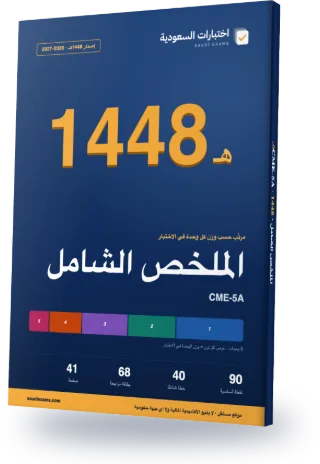
- Complete Review Guide 2026–2027 (PDF)Ordered by each unit's weight in the exam. With lifetime access only.
Choose your access
Continue with your Google account and you go straight to the payment page.
You pay on the Waffo Pancake checkout page (in English). The amount is in US dollars and your bank converts it to riyals. One payment with no automatic renewal, by Visa, Mastercard (a mada card with either logo works too), Apple Pay or Google Pay. Your statement shows "WAFFO". Purchases are not refundable.